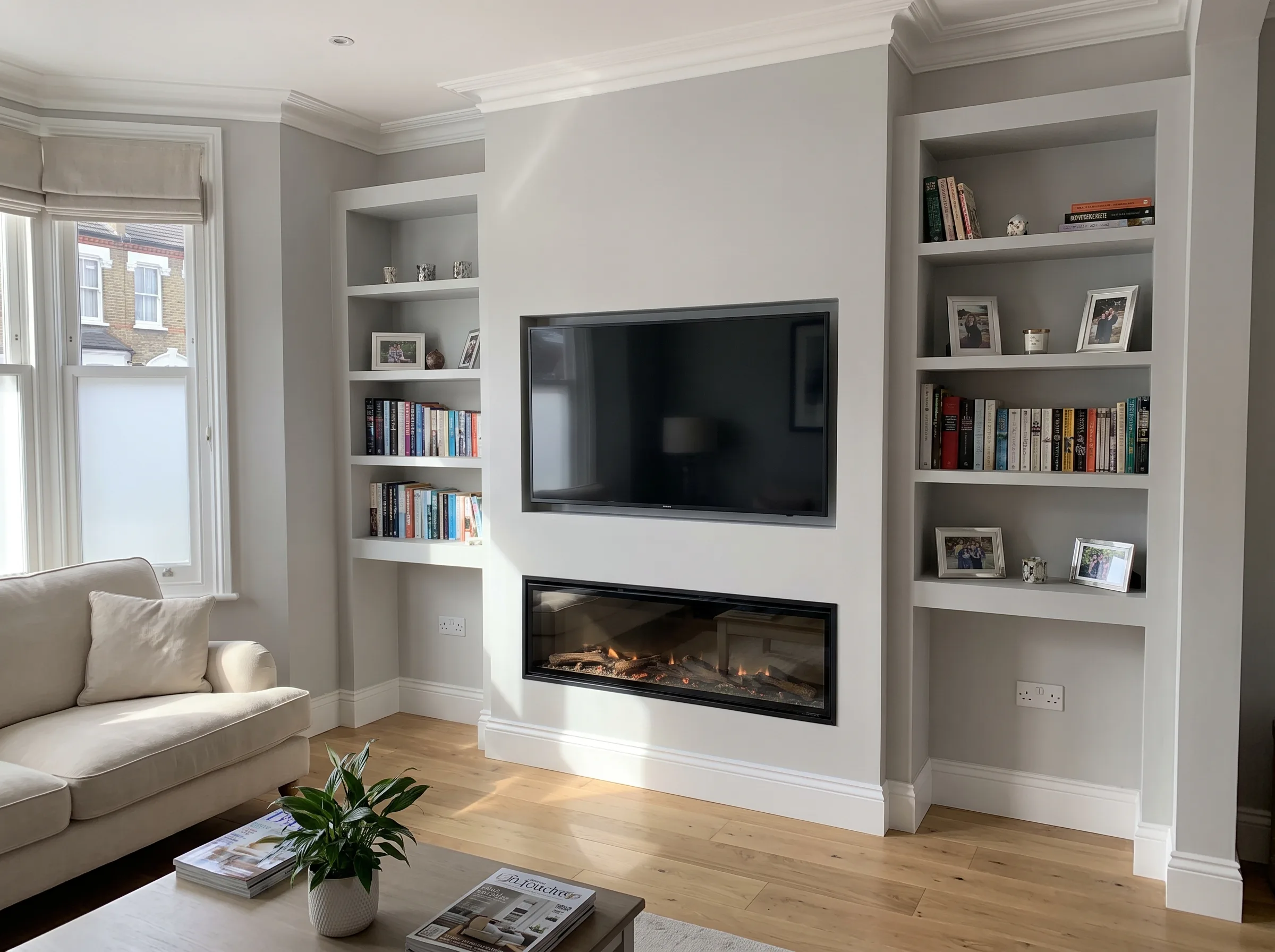

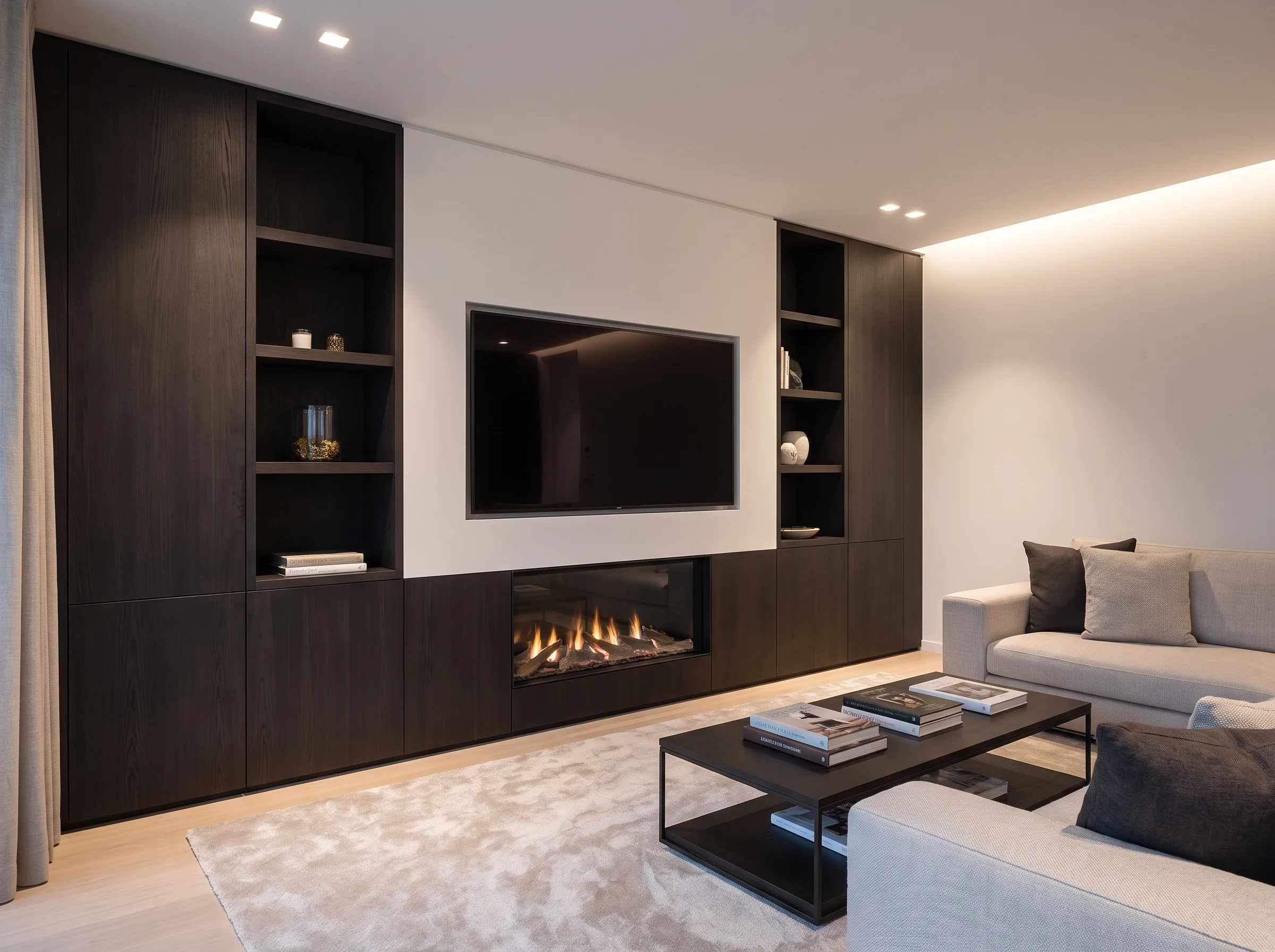
Media Wall: Transform Your Living Room Today
Media wall integrates screens, lighting, and décor into one cohesive focal point that transforms your living room with architectural sophistication.
TABLE OF CONTENTS
- Media Wall: Transform Your Living Room Today
- What Is a Media Wall and Why Is It Worth Having?
- How a Media Wall Becomes the Focal Point of Your Living Room
- Types of Media Wall Designs for Every Interior Style
- Choosing the Right Materials for Your Media Wall
- Media Wall Planning: Measurements, Layout, and Structural Considerations
- Integrating Lighting Into Your Media Wall for Maximum Impact
- Cable Management Solutions for a Clean Media Wall Finish
- Custom Media Wall Features: Shelving, Panelling, and Alcoves
- Media Wall Installation: DIY or Professional Service?
- How Much Does a Media Wall Cost?
- Media Wall Maintenance and Long-Term Care Tips
- Real Living Room Transformations: Media Wall Before and After
Media Wall: Transform Your Living Room Today
The living room has always been the heart of the home - a place for relaxation, connection, and entertainment. Yet scattered electronics, tangled cables, and mismatched furniture can make even a beautifully designed interior feel chaotic and unfinished. There is a smarter way to bring it all together.
One Installation, Total Impact
A media wall changes the entire dynamic of a room. By integrating screens, accent lighting, and decorative elements into a single, architecturally cohesive structure, it creates a stunning focal point that immediately elevates the space - visually and functionally.
Technology Built Into Your Space
Unlike a standard TV unit, a media wall is engineered directly into the fabric of your interior. Custom frameworks, precision cable management, and carefully selected materials combine to deliver a seamless, professional finish that reflects your personal style while maximising every square metre of your living room.
What Is a Media Wall and Why Is It Worth Having?
Forget the bare TV bracket screwed to a painted wall. A media wall is a custom-built, architecturally integrated structure that houses your screen, speakers, and decorative elements within a single, cohesive design - turning a functional necessity into a genuine statement piece. It is not furniture you place in a room; it is part of the room itself.
More Than Just a Screen
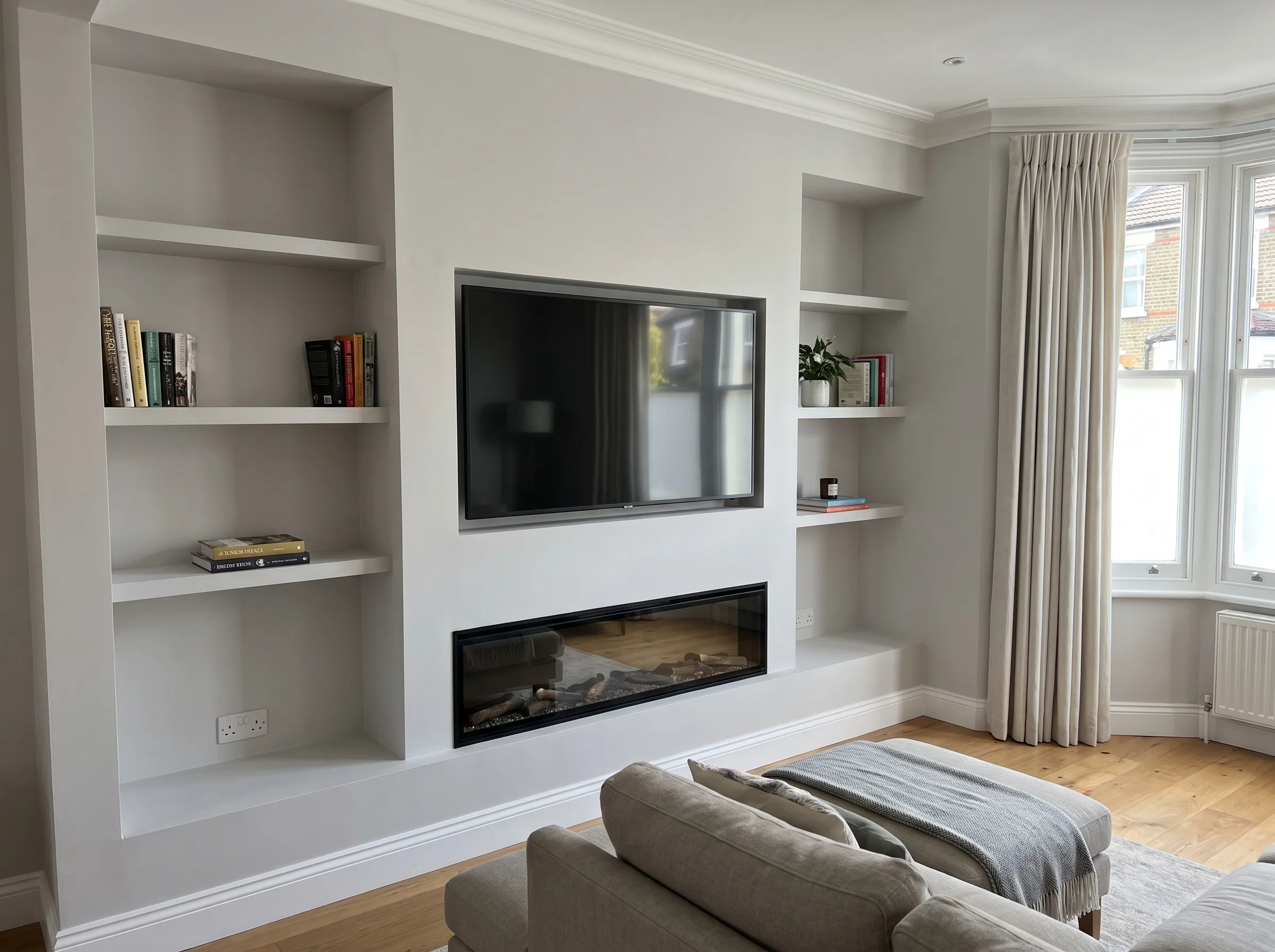
A media wall transforms the visual focal point of your living room, blending technology seamlessly with interior design. Rather than an afterthought, your entertainment setup becomes part of the architecture - finished with materials like plasterboard, recessed lighting, and custom panelling.
Why It Is Worth It
The benefits go well beyond aesthetics:
- It eliminates cable clutter through integrated management built directly into the structure.
- It creates a bespoke centrepiece that adds measurable value to your property.
- It combines storage, display, and technology in one space-efficient installation.
How a Media Wall Becomes the Focal Point of Your Living Room
Every well-designed living room needs an anchor - one element that defines the layout and gives the space its character. A media wall does exactly that. By combining integrated screens, accent lighting, and carefully chosen materials into a single cohesive structure, it transforms an ordinary wall into the undisputed centre of the room. Furniture naturally positions itself around it; conversations and attention follow.
Design That Commands Attention
Unlike a television mounted in isolation, a media wall creates visual depth through recessed frameworks, decorative panelling, and layered lighting. These elements work together to produce a display that feels intentional rather than added as an afterthought - a feature built into the room, not placed inside it.
A Space With Clear Purpose
When every element revolves around a single focal point, the entire room gains a sense of direction. The result is a living space that feels curated, modern, and effortlessly put together.
Types of Media Wall Designs for Every Interior Style
No two living rooms are alike, and neither are media wall designs. Whether your home leans toward sleek modernism or warm rustic character, there is always a style that fits naturally into your space.
Sleek and Minimalist Options
A minimalist media wall built from smooth plasterboard with recessed lighting and hidden cable management suits contemporary interiors perfectly. Clean lines and a flush-mounted screen create an uncluttered focal point that feels deliberate rather than imposed.
Textured and Character-Rich Styles
For those who prefer personality over simplicity, brick-effect finishes, timber surrounds, and decorative panelling bring genuine warmth to any media wall. Popular choices include:
- Industrial brick-effect cladding paired with matte black fixtures for an urban, warehouse-inspired aesthetic.
- Natural timber frames and custom shelving that complement Scandi or rustic interiors beautifully.
- Fluted panelling in neutral tones that bridges classic and contemporary design with effortless elegance.
Whichever direction you choose, the result is a space that feels both purposeful and visually compelling.
Choosing the Right Materials for Your Media Wall
The materials you choose will make or break your entire build. Plasterboard remains the industry standard for framing - it is lightweight, easy to cut, and delivers a smooth, paint-ready base. Pair it with high-density MDF for shelving and decorative panels, where its fine grain holds lacquer and paint exceptionally well, producing crisp, professional edges.
The Role of Recessed Framework
A properly engineered recessed framework is what gives a media wall its signature flush, built-in appearance. Steel or timber studwork forms the structural backbone, keeping every component rigid and level - which is critical when mounting large, heavy displays.
Surface Finishes That Elevate
The final surface treatment defines the overall character of your media wall. Whether you choose smooth painted plasterboard, textured decorative panels, or a combination of both, prioritising consistent material thickness ensures tight joins, clean lines, and a result that looks genuinely bespoke rather than assembled.
Media Wall Planning: Measurements, Layout, and Structural Considerations
The planning phase sets everything in motion. Before a single panel is cut or a cable is run, precise measurements and structural assessments determine whether your media wall becomes a lasting centrepiece or a costly mistake. Wall dimensions, ceiling height, and the load-bearing capacity of the chosen surface all directly influence the final design.
Load-Bearing and Structural Checks
No media wall installation should begin without confirming that the host structure can handle the combined weight of screens, plasterboard, and mounting hardware. When in doubt, consult a structural engineer - it is a step that pays for itself.
Key Measurements to Take First
Getting these right from the outset prevents expensive rework:
- Measure the full wall width and height to establish the maximum footprint.
- Identify socket and cable entry points before fixing the framework position.
- Record the floor-to-ceiling clearance to ensure the screen sits at a comfortable viewing height.
- Note the distance from seating to confirm the optimal screen size.
Integrating Lighting Into Your Media Wall for Maximum Impact
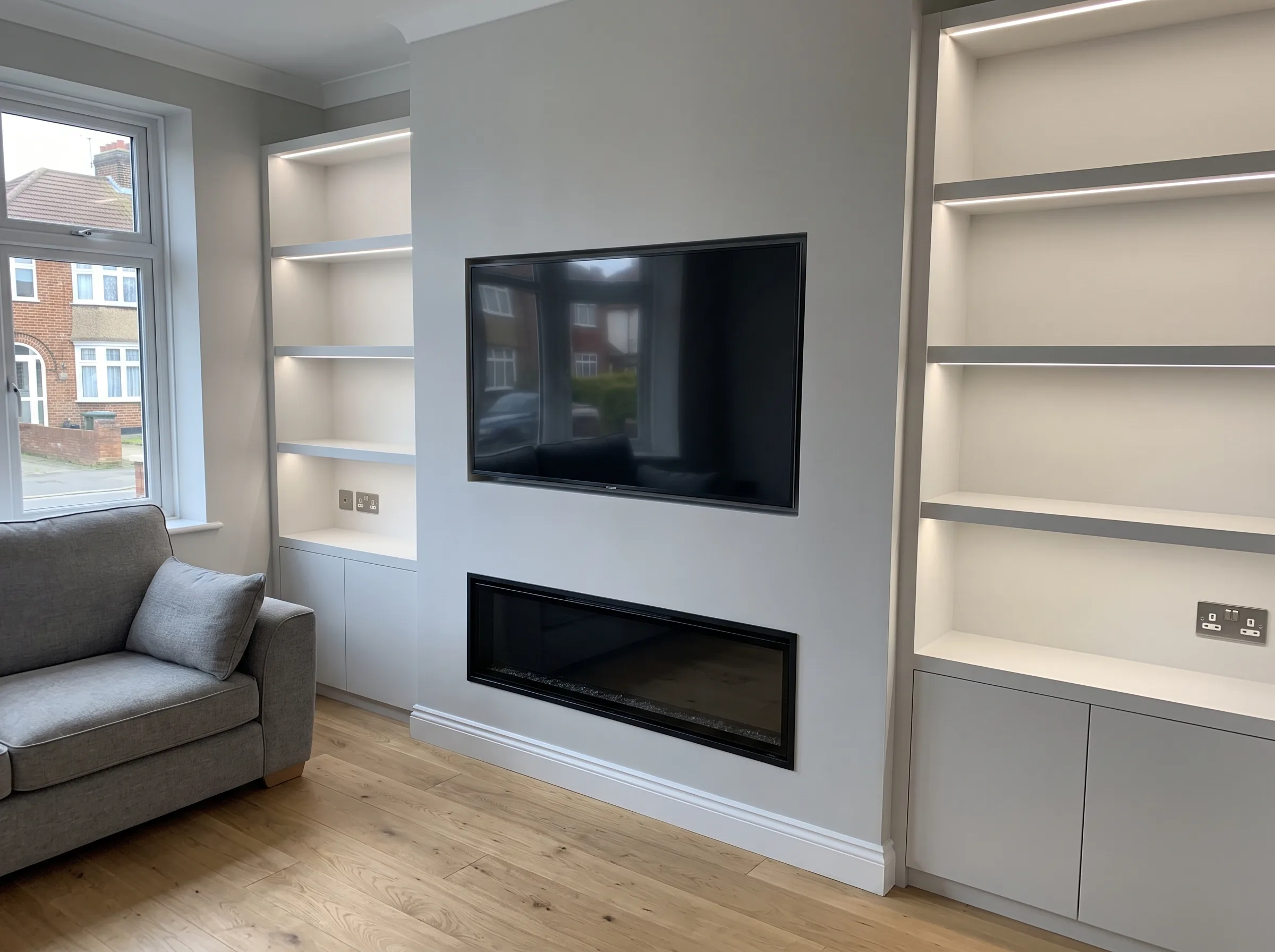
Lighting is one of the most powerful - and most overlooked - elements in any media wall design. The right combination of LED strips, recessed spotlights, and backlit panels shifts the atmosphere of an entire room, turning a straightforward installation into something genuinely striking. Strategic placement matters as much as the fixtures themselves.
Choose Your Lighting Layers
A well-designed media wall typically benefits from three distinct lighting approaches:
- LED strips tucked behind the screen create a soft bias glow that reduces eye strain during long viewing sessions.
- Recessed spotlights highlight decorative shelving or sculptural elements flanking the display.
- Backlit panels add depth and dimension, making the whole structure appear to float from the wall.
Match Mood to Function
Colour temperature and dimmer controls allow you to shift from vibrant cinema mode to a calm ambient setting in seconds. A thoughtfully lit media wall becomes as much a design feature as an entertainment hub - impressive even when the screen is off.
Cable Management Solutions for a Clean Media Wall Finish
Nothing undermines a sleek, polished installation faster than a tangle of visible cables snaking across the wall. Planning cable management from the very first stage of your media wall build is not optional - it is the foundation of a truly professional result.
Plan the Routes Early
Before any plasterboard goes up, map every cable route, socket position, and connection point. Recessing conduits within the wall structure keeps everything hidden and accessible for future upgrades. A well-designed media wall relies on this invisible infrastructure just as much as its visible finish.
Key Cable Management Essentials
- Route all power and HDMI cables through in-wall conduits during the structural phase.
- Install recessed sockets directly behind the television to eliminate trailing leads entirely.
- Label every cable before concealing it to simplify future maintenance and replacements.
The Result Worth Planning For
The difference between an average and a stunning media wall often comes down to what you cannot see.
Custom Media Wall Features: Shelving, Panelling, and Alcoves
A media wall is never just a screen. The most striking installations go far beyond a flat surface, incorporating bespoke shelving, decorative panelling, and carefully crafted alcoves that transform a functional unit into a genuine design statement - one that reflects your personality and works for your lifestyle.
Shelving and Alcoves Done Right
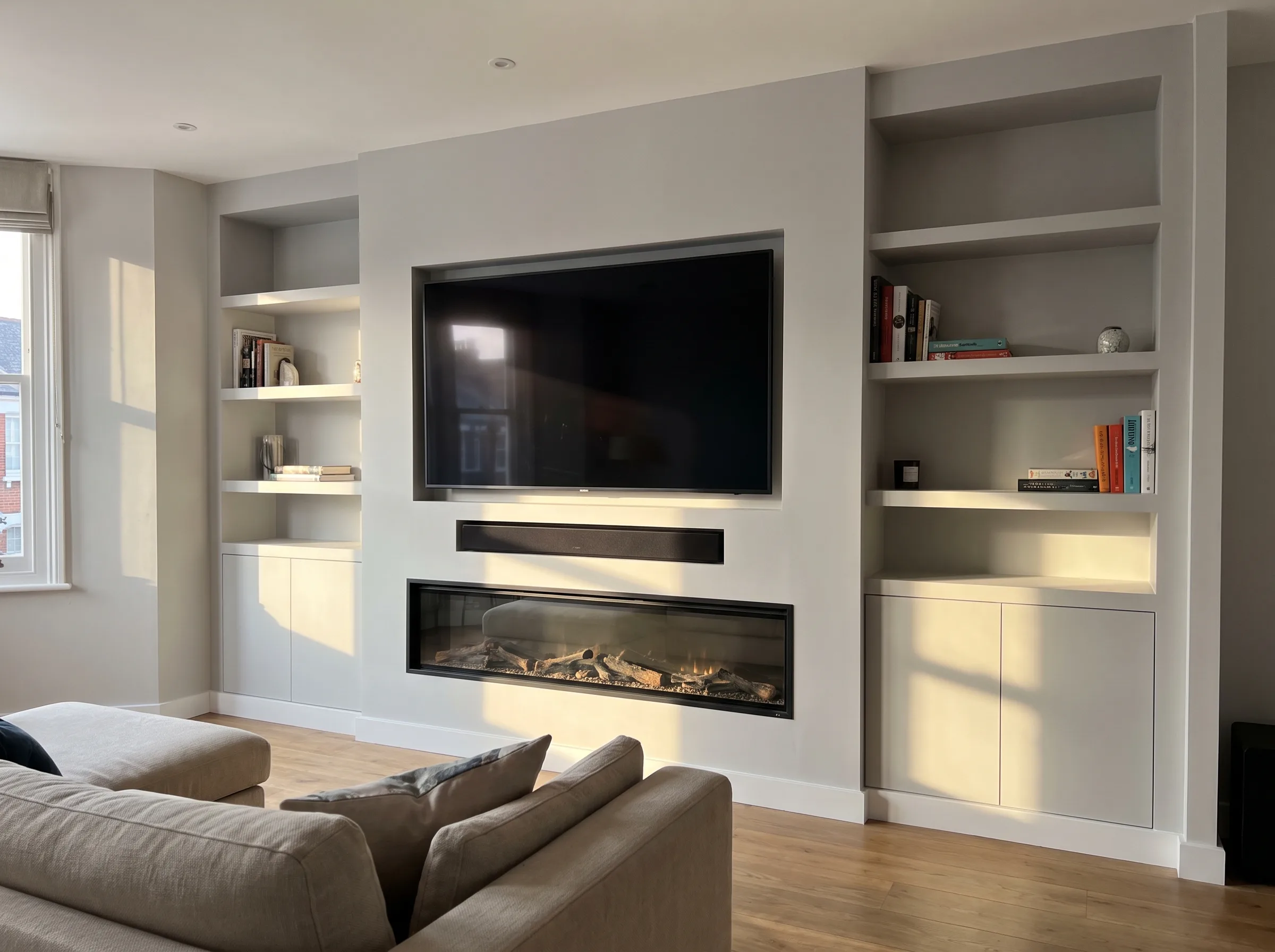
Recessed alcoves and floating shelves introduce depth and character, creating dedicated space for books, ornaments, or atmospheric lighting. Custom shelving integrated directly into the media wall structure keeps everything organised without cluttering the room.
Panelling for Visual Impact
Decorative panelling adds texture and sophistication to the entire installation. Popular choices include:
- Fluted panels for a contemporary, high-end aesthetic
- Shiplap-style boarding for a warm, relaxed atmosphere
- Ribbed MDF panels for clean geometric definition
Each element can be tailored precisely to your taste, making every media wall a truly unique and cohesive centrepiece.
Media Wall Installation: DIY or Professional Service?
Installing a media wall looks deceptively straightforward - until you're faced with load-bearing walls, cable routing through plasterboard, and flush finishes that demand millimetre-level precision. Confident DIYers can certainly handle simpler tasks: surface-level painting, decorative panelling, or mounting lightweight shelving. But the moment structural alterations, recessed frameworks, or electrical integration enter the picture, the margin for error narrows fast.
When DIY Makes Sense
If you're working with a pre-existing alcove and need only cosmetic customisation, a skilled DIYer can achieve solid results. Basic cable concealment behind trunking and straightforward assembly are well within reach for anyone comfortable with tools and a clear plan.
The Case for Professionals
A fully integrated media wall - with recessed mounting, coordinated electrical works, and precision-aligned accent lighting - demands expertise that professionals consistently deliver. Poor cable management or miscalculated structural support can compromise both safety and the finished look. Expert installation is not just a convenience; it is an investment in durability and a truly polished result.
How Much Does a Media Wall Cost?
The total cost of a media wall depends on several interconnected factors - from the size of the installation to the complexity of electrical integration and the quality of finishing materials. A straightforward setup can start from a few hundred pounds, while a fully bespoke media wall with custom shelving, decorative panelling, and accent lighting can run into several thousand.
Key Cost Factors to Consider
The main variables that shape your final budget include:
- Materials such as plasterboard, recessed framework, and specialised mounting systems directly affect the base price.
- Custom features like integrated lighting, decorative panelling, and bespoke shelving significantly increase the total investment.
- Labour covering carpentry, electrical works, and precise cable management typically accounts for a substantial portion of costs.
Getting the Budget Right
Planning ahead makes a real difference. Request itemised quotes that separate structural work from finishing details, and always factor in electrical compliance. A well-executed media wall delivers lasting value - both in daily comfort and long-term property appeal.
Media Wall Maintenance and Long-Term Care Tips
A well-maintained media wall is a long-term investment, and protecting that investment means building a simple care routine into your schedule. Dust accumulates quickly around screen bezels and recessed framework, so a soft microfibre cloth used weekly prevents build-up that can gradually dull the finish over time.
Electrical and Structural Checks
Periodic inspection of electrical components is essential. Loose connections, overheating cables, or minor shifts in the plasterboard structure can escalate into costly repairs if left unaddressed. Schedule a professional check annually to keep everything safe and properly aligned.
Simple Habits, Lasting Results
Keeping your media wall in top condition comes down to consistency:
- Dust screens and shelving weekly using a lint-free cloth to avoid surface scratches.
- Check cable management channels every few months to ensure no wires have worked loose.
- Inspect accent lighting for flickering, which can signal a failing connection.
- Avoid placing drinks or plants on integrated shelving to prevent moisture damage.
Small habits today protect your installation for years to come.
Real Living Room Transformations: Media Wall Before and After
Nothing communicates the potential of a media wall quite like a genuine transformation story. Clients who once lived with bare, mismatched walls and tangled cables now describe their living rooms as unrecognisable - calmer, more cohesive, and undeniably impressive.
From Cluttered to Composed
The most dramatic media wall projects share a clear pattern of changes homeowners notice immediately:
- A single, sleek focal point replaces scattered screens and freestanding furniture.
- Concealed cable management eliminates the visual clutter that previously dominated the room.
- Integrated accent lighting adds depth and atmosphere that no freestanding unit can match.
Results Worth Seeing
Clients consistently report that a professionally installed media wall increases their perceived living space and adds measurable value to the property - without a single structural extension.